
Ngako: The Collections Talk exclusive filmaker interview
Exclusive Interview
|
Louise van Rooyen - Beamafilm
|
13/02/2026
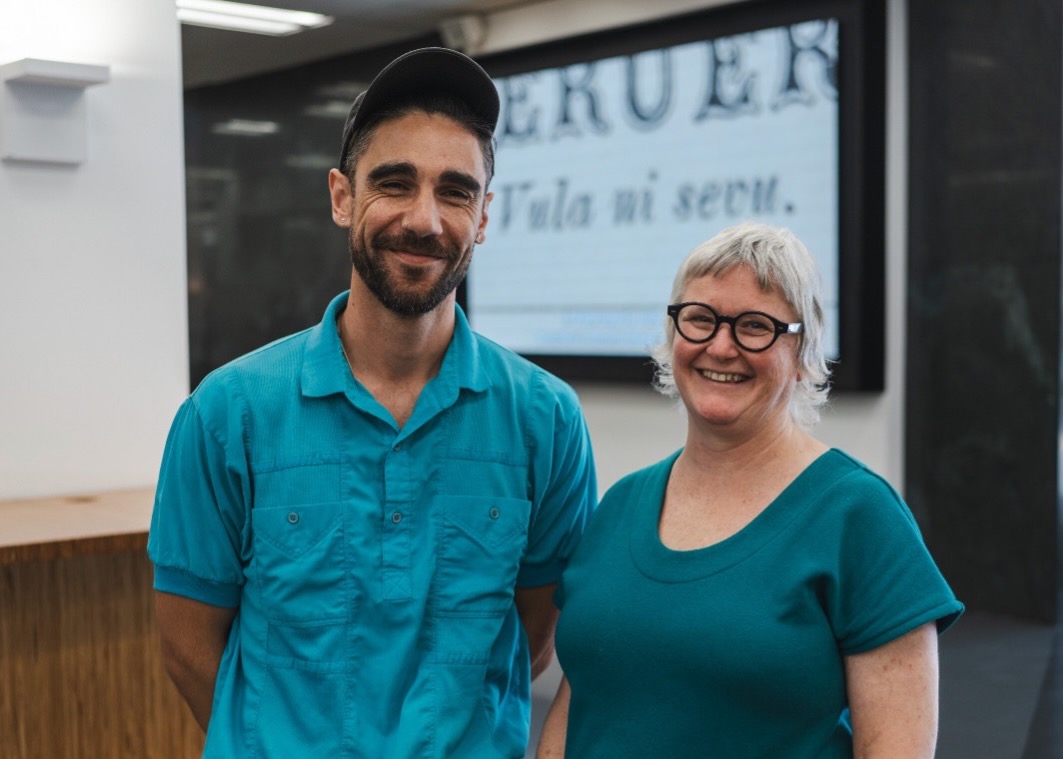
Director Benjamin Brooking and producer Sue Berman talk to us about their impactful documentary series, Ngako: The Collections Talk - Auckland Central City Library, February 2026.
Watch 'Ngako: The Collections Talk' on Beamafilm now!
Available for subscribers
Available for rental
A documentary heritage series that draws on treasures from the Auckland Council Libraries Heritage Collections.
Director:
Kia ora, Sue and Benj, thanks for agreeing to this exclusive interview with Beamafilm - it’s our pleasure to speak with you today.
BEAMAFILM: Ngako is inspirational, so we'd like to begin this interview by asking what inspired you to make this fascinating series?
BERMAN: The material collections and the voices of the people who know the content are absolutely the inspiration for this series. For a few years, I had worked on an audio-only podcast about items of interest from the Heritage Collections. One year, we made a special series called Meet a Rare Book. As part of that work, I was referred to videographer Benjamin Brooking to create a short promotional piece for that series. He had such a good eye and engaged in a less-than-obvious story, while centring the narrator alongside the books. He worked in a way I was familiar with as an oral historian, and we really clicked. I applied for funding to make a fuller series of films together, and this is what we came to call Ngako: The Collections Talk.
BROOKING: I love our libraries, and when Sue brought this concept to me – to create stories that engage with some of the niche collections that Auckland Libraries holds, I was on board right away.
The most inspiring part of the concept for me was the opportunity to photograph the material in intricate detail. I wanted to recreate the experience of having someone point out a detail on an item, something small in the margins, or something peculiar that you might take a close look at and try to show the textures and colours as true to life as possible.
So, I knew from our first meeting that I would want to do a lot of very close-up shots of the works, which was an exciting prospect.
Ngako: The Collections Talk
BEAMAFILM: It must've been difficult deciding which collections to feature in the series. Can you share some background on the curatorial and decision-making process?
BERMAN: Auckland Libraries hold a range of print and documentary heritage material. This ranges from significant taonga Māori collections, rare books, archives, manuscripts, posters, oral histories, serials, and newspapers to large historical and contemporary photographic collections. The collections are rich across time, subject, and place. An interesting story often sits within the item itself, what we call provenance, the story of where the item came from, or what or who produced or collected the item. For this project, we initially worked with a peer review process that helped establish priorities and measures. People submitted suggestions for stories, and we developed the project from there – sometimes combining ideas across projects to bring together a stronger storyline – you can see that in the story of Extraction and Conservation on Rangitoto Island. The series was born out of three different funding rounds, and as we went along, we were able to have a clearer sense of what would work. We also created content that supported existing or proposed exhibitions. For example, Henry Winkelmann - The Panoramas, and Waitaia Nga Nutu, both have supported in-house exhibitions.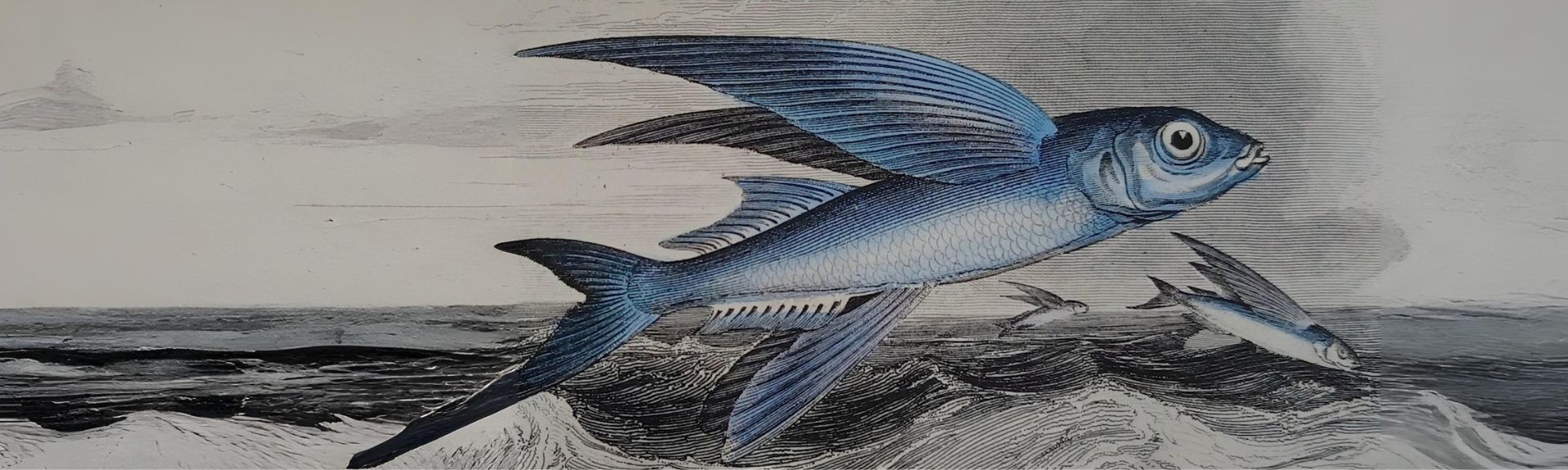
Following the Moon – Pacific Lunar Calendars
BEAMAFILM: We are offering the 14 individual documentaries as well as the full Ngako series to library audiences worldwide. Can you talk to the central themes or signature approaches you took with each film that weave them together?
BERMAN: Benj and I worked through a number of format options before settling on the unscripted 'narrator behind the desk'. We both liked the simple power of asking, “tell me about what we are looking at” and letting the story unfold. Of course, most stories had an additional byline or adjacent story we enjoyed weaving in. For example, in the J. T. Diamond story, we moved from talking about the content of this extraordinary collection to talking about Jack the collector by adding a visit to his son John. He offered a warm 'remembering' of family times spent and the impactful role of his mother, Melville, on what has come to be known as the J.T. Diamond Collection. I find the films are most engaging when the narrator establishes a personal attachment or connection to the material.
BROOKING: We also wanted to connect the collections to members of the community, to explore the ways that preserving and protecting documentary heritage has an impact on people today. So for the series, we were always making community connections, rather than just keeping the stories inside the library and only told by librarians.
One of my favourite stories is The Pepa Trail – Printing in Rarotonga. Mainly because the items we featured were just so fascinating, but in this story, we were also able to facilitate a community viewing of these items, and it was a very special moment for me.
The Pepa Trail – Printing in Rarotonga
BEAMAFILM: The documentaries feature interviews with leading library curators and subject-matter experts, along with fascinating archival footage. What was it like working with the film cast, and how did you get them interested in the project?
BERMAN: Good question – how do you get a stack of librarians who are mostly public speaking averse in front of a camera? It took a bit of cajoling, but Benj is a great camera coach and director, and we managed to create a comfortable environment in a familiar space for the talent to shine. Because it was unscripted, we needed to create a space that allowed the expertise of the curators and community to find their voice. All the participants gave feedback that they enjoyed being part of the process and that it was less intimidating than they had thought it might be. It’s interesting for people to also experience the impact of the use of archival or imagery from the first edit – effectively a radio reel [just the narrator talking behind the desk] to the final film, which inserts the imagery and finer details through pictures – plus a soundscape – it’s at this intersection that the magic happens.
BROOKING: Sue did an enormous amount of work in preparation for the filming days, which meant that everything was ready, the items were all tracked down and ready to go, and people felt calm and ready to talk about their subject. Sue also has a long history of creating audio projects at the libraries, so full credit to her for taking this concept and getting people interested in being a part of it. Once we knew we wanted to have our narrators shown on screen rather than just as a voice over, we could see that the subjects we chose would need to be substantial and interesting not only to our audience, but also to the subject matter experts.
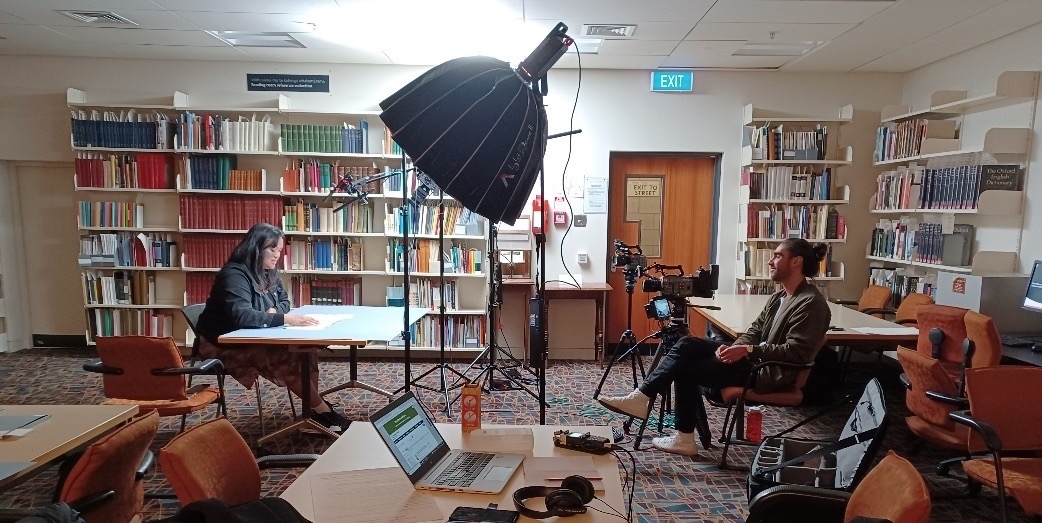
Nia Vavao and Benjamin Brooking filming Following the Moon – Pacific Lunar Calendars, 2023, Auckland Central Library Heritage Collections Reading Room, photograph by Sue Berman
BEAMAFILM: How did you assemble the cast and crew and what was it like working together?
BERMAN: We were a very low-key unit. Really, there was just Benj and me and a couple of narrators in the room – occasionally we had a supporting member of staff in the room, and once we had the very talented Post-Production Director – Juliana Machado - with us during filming.
BROOKING: Sue was also excellent to work with on set as she really understands the process, and also has all of the story context to make sure we’re covering every aspect of the story correctly. We didn’t want to have a lot of crew on location, as we didn’t really want to make our talent feel any more on the spot than they already were. So, I chose to strip the setup back to what I considered the essentials, and it was possible for us to spend a long time setting up all of our mics and cameras, and then hitting record and just taking as long as we needed to get the story from there. Having Juliana present helped a lot as well, as we could have someone watching with the edit in mind, and make suggestions from that perspective. 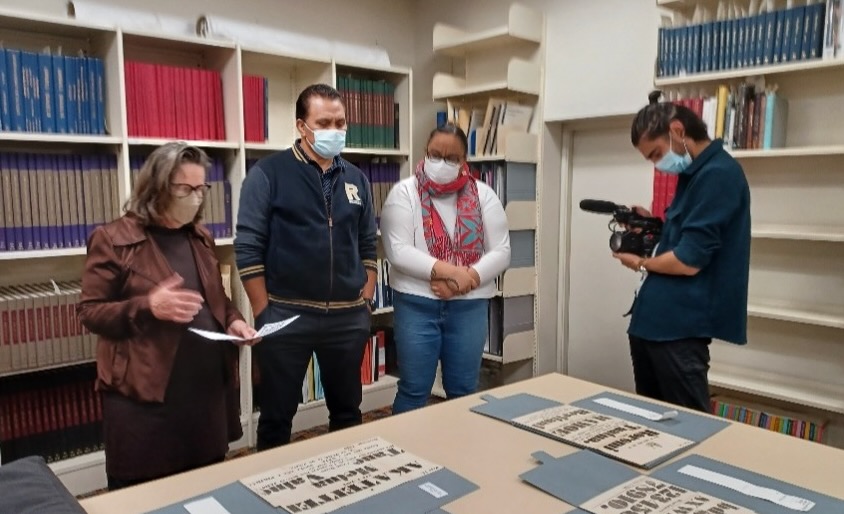
Jane Wild, Matara Tuaputa, Angelique Tuaputa and Benjamin Brooking, during filming for The Pepe Trail – Printing in Rarotonga, 2021, Auckland Central Library Heritage Collections Reading Room, photograph by Sue Berman
BEAMAFILM: If you could nominate one or two scenes as your favourites in the series, which would it be and why?
BERMAN: That’s like asking someone to choose their favourite child! I really enjoyed the filming of the Pepe Trail story with members of the Cook Island community interacting with the posters. There was so much joy and meaning-making in that time together. Great intergenerational conversations. You will see in the scene that we are still wearing masks as we were emerging out of lockdown from Covid-19, still working with social distancing and mask wearing, capturing a further dynamic of our time.
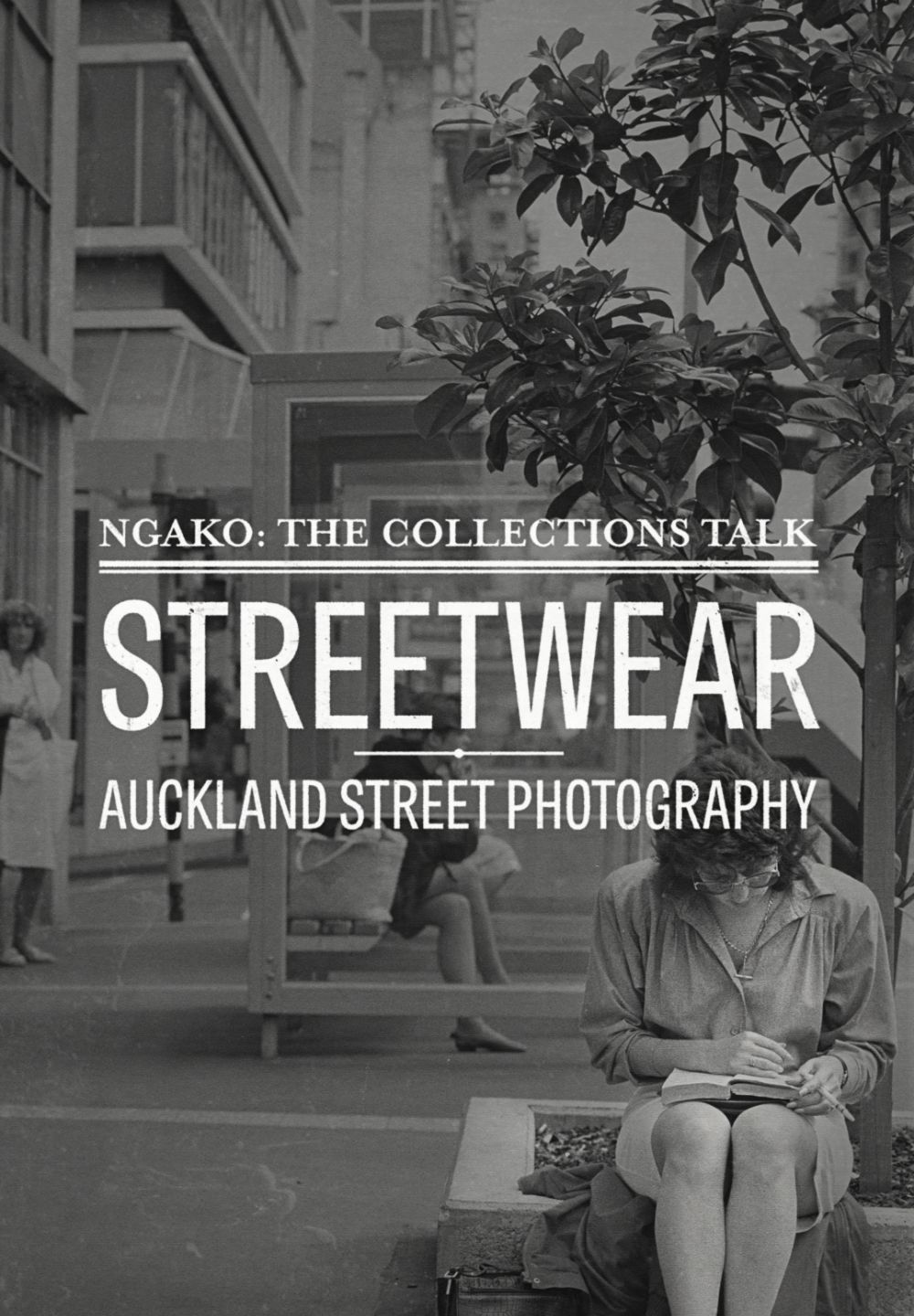
I also enjoyed the time we spent filming out on the Queen Street, Hight Street and Karangahape Road with Renée Orr and Doris De Pont for the Streetwear episode. It was great to locate the collections and the stories they imbued in the physical spaces and to have the interaction of people on the street to filming. It was a dynamic space to work in and it really enlivened the final film to have those scenes and sounds.
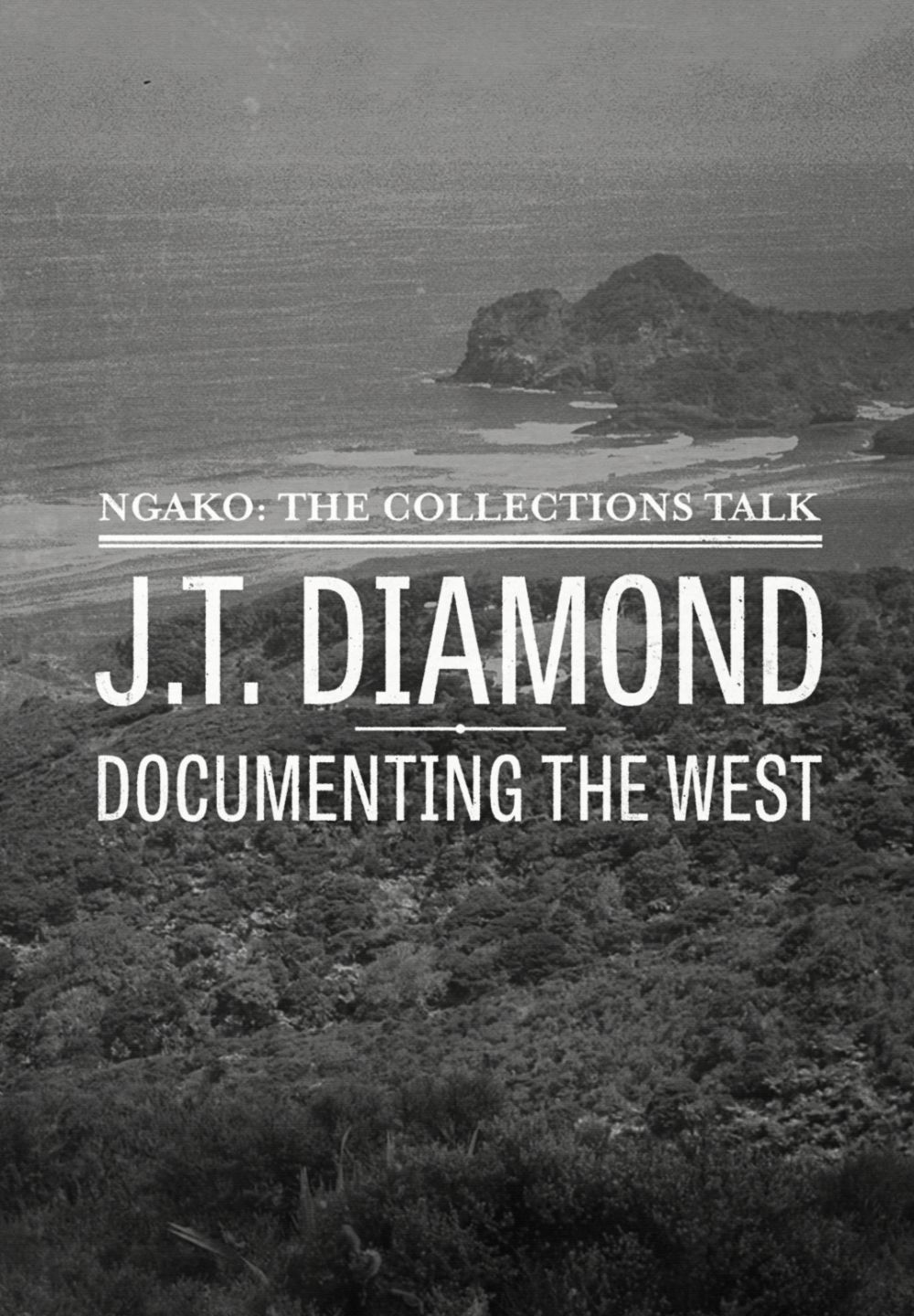
BROOKING: My favourite scene is one that really came through in the edit. There is a moment in the J.T. Diamond story where Erica is describing the different types of bricks that were being produced at a particular brickworks in New Lynn. When I heard her read the list I knew I wanted to get an image of every brick she read out, and it became one of those moments that, while focusing on a tiny part of a collection, really illustrate the character of the entire collection and its author. 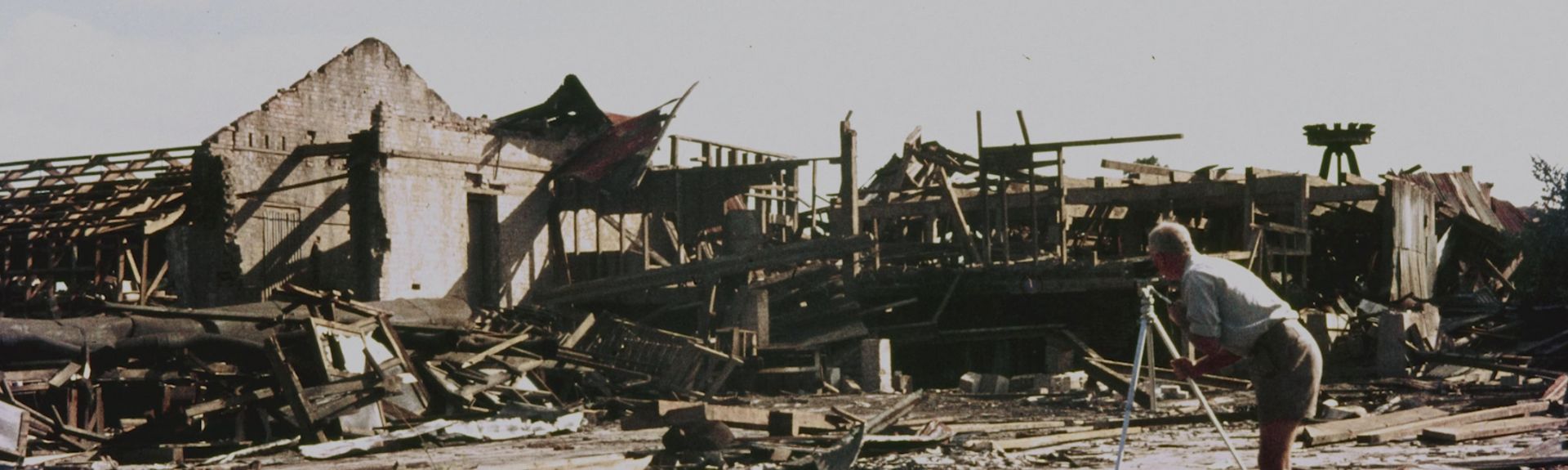
J.T Diamond - Documenting the West
BEAMAFILM: Do you have any standout behind-the-scenes stories from the making of the series that you can share with the Beamafilm audience?
BERMAN: I think that some of the back stories that surfaced in the process of researching stand out for me. Liam Appleton for example did an amazing piece of research that started with a very important historical document from the Old Colonist Museum collection that became the episode Hohou Rongo - The Peace Covenant. He followed a line of enquiry related to the provenance of the documents and paintings, using family history research techniques and his deep research skills to unravel new additional contexts to the collection item. I really valued the collegiality and support for the storytelling that the team brought to Waiwaia Ngā Ngutu, the level of care and accountability to tipuna [ancestors] expressed through karakia [blessings] and te reo [the language]. Both this piece and Ngā Reta Māori remind us of the power and mana of language and the skill and nuance that sits across dialects with shifts and changes in living language.
BEAMAFILM: Can you share any insights into how you approached the score?
BERMAN: We were keen to support as much as we could afford, some level of original locally produced sound. I love the soundscape we have used as the transition in the title scenes across all the films. It is folksy and upbeat, a bit quirky and fitting.
BROOKING: The theme song is a track composed by Claire Cowan. I had heard her perform several times before, and so when the search for music began, I went straight to her to ask about licensing a track because there is a certain eclectic sensibility I had heard in her music that I wanted to incorporate.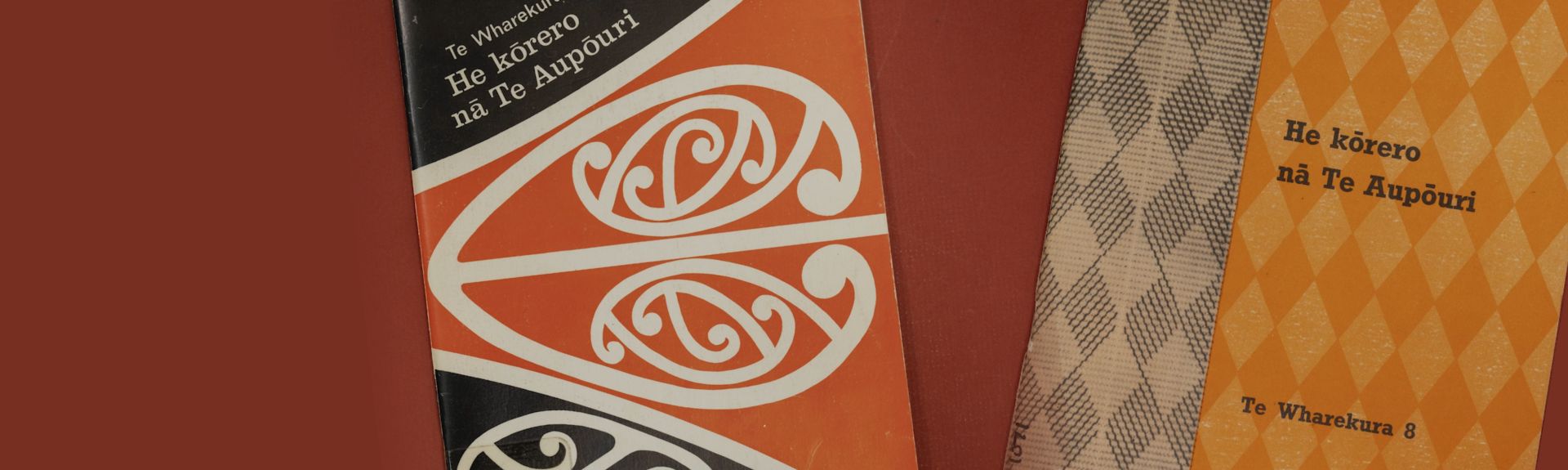
Waiwaia Ngā Ngutu
BEAMAFILM: How have audiences been responding to the series so far? Can you share any of the conversations you’ve had with viewers?
BERMAN: People seem to really relate to the films across their diverse content. I think they enjoy the accessible format and bit size timing. Particular communities have celebrated being made visible and having taonga or treasures related to their histories being given airtime. We launched the first five films as part of Auckland Council’s annual Heritage Festival one year and the films got a screening on a big movie theatre screen with full surround sound – people really enjoyed that night and it set the films off well on their journey.
BROOKING: The comment I enjoy receiving the most is about how tactile the items feel – even though they’re just pixels on a screen. That response always makes me feel like I achieved a personal goal for the series.
BEAMAFILM: Can we ask how making the Ngako series has affected you personally and professionally?
BERMAN: I have learnt a lot through the filmmaking process. I have traditionally been an audio-only oral history interviewer and podcast maker. Through this film process, I have learnt how much story can be told through weaving in visual storytelling components. There is a tremendous amount of work in the production role with coordination of the many cogs pre, during, and post-production, so my hat goes off to the critical role played by Benj and Juliana in bringing us well-crafted story lines at first edit to work with. I think I have grown in my skills for crafting story - not just recording the interviews but also producing story with that material. Benj and I co-produced Ngako: The Collections Podcast series because we came across storylines we wanted to explore further, but didn’t have the budget to include the visual production elements for eight more stories! If you enjoyed the films, I think you will also enjoy listening to the podcast series.
BROOKING: For me, making Ngako has meant an opportunity to work with collections of material brought together by highly professional researchers. This has given me a much better understanding than I had previously of just how much material is available on a given subject, and also a glimpse into how that kind of deep research is conducted. I think the opportunity to work with the librarians and researchers in the show has been invaluable. I’ve also very much enjoyed working alongside Sue, whose oral history experience has been absolutely fascinating to draw on as well.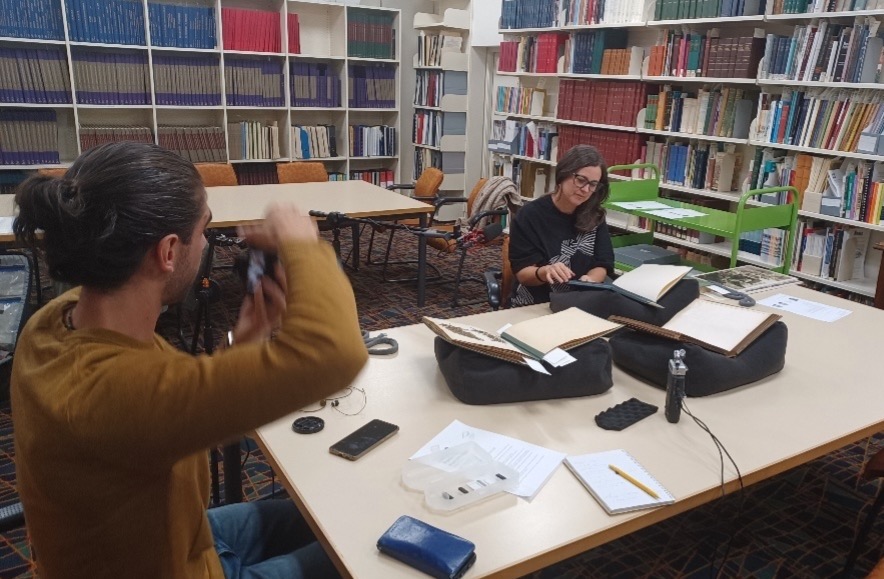
Podcast recording with Benjamin Brooking, Renée Orr at Auckland Central Library for an episode Fernmania, 2024
BEAMAFILM: Are you currently working on any new projects you can tell us about?
BERMAN: I have my fingers in a few pies! I am supporting a number of oral history projects of people and place, ongoing production of podcasts and curatorial work towards our exhibition offer here at Auckland Central Library. Our next exhibition Encore! is about music and music venues across Auckland Tāmaki Makaurau and we’ve commissioned some contemporary oral history interviews about the electronica, dance, rave scenes of the 1990s and early 2000s. I’ll be working on producing a podcast series from that content. The Ngako film King Pin – The Dave Cameron Collection will feature as part of the next exhibition [opening September 2026], where we will be bringing material from that collection out for view. Film-wise, Benj and I are working on a short ‘how to’ like documentary film that centers on a story of research on a property, exploring the tools for researching our collections, through the story of land and the three very different buildings and uses applied through a single address. We hope to use the film as a teaching tool in delivering research workshops to beginner researchers.
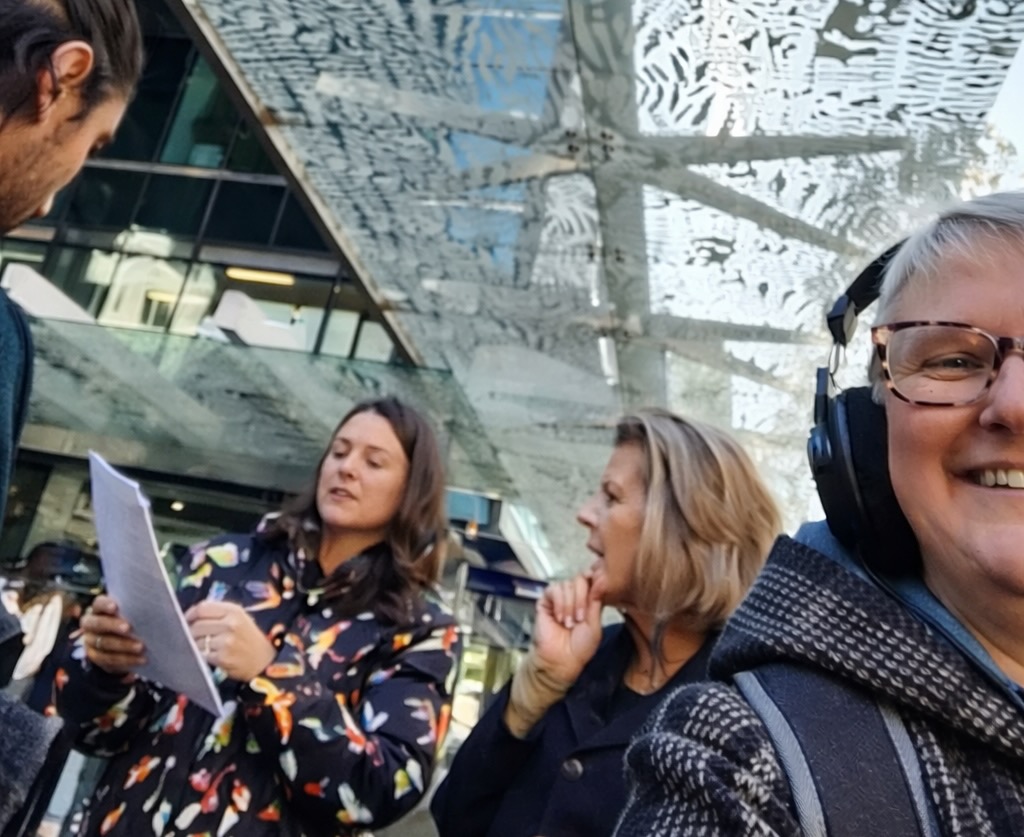
Benjamin Brooking, Renée Orr, Doris de Pont and Sue Berman, filming on Queen Street for Streetwear – Auckland Street Photography, 2021, Photograph by Sue Berman
Thanks, Sue and Benj - we really appreciate you sharing these fascinating insights with the Beamafilm audience!
Watch 'Ngako: The Collections Talk' on Beamafilm here!
More from
Available for subscribers
Available for rental
An exploration with Māori specialists across a range of published material that reflect the journey of written te reo Māori language
Director:
Available for subscribers
Available for rental
An exploration into the provenance of a significant historical document, Hohou - The Peace Covenant, and its discovery amongst the papers of the Old Colonists Museum...
Director:
Cast:
Available for subscribers
Available for rental
An exploration into an internationally significant boxing and wrestling archive collection by Dave Cameron.
Director:
Available for subscribers
Available for rental
An exploration into the ongoing significance of an early publication documenting life on the Tongan Islands in the late eighteenth century.
Director:
Available for subscribers
Available for rental
An exploration into a family history research index to help identify matrilineal lines often lost in early colonial settler records.
Director:
Available for subscribers
Available for rental
An exploration into the use of lunar calendars in the Pacific in the late 1800s.
Director:
Available for subscribers
Available for rental
An exploration through the archives into the dynamics of Lesbian and Queer spaces in Auckland prior to Homosexual Law Reform.
Director:
Available for subscribers
Available for rental
An exploration into the glass plate photographic collection of Henry Winkelmann and the creation of panoramic views of early Auckland.
Director:
Available for subscribers
Available for rental
An exploration into an early Māori phrasebook, first published in 1885.
Director:
Available for subscribers
Available for rental
An exploration through the archives into extraction and conservation on Rangitoto Island.
Director:
Available for subscribers
Available for rental
An exploration into the relationship and the context of early Auckland as shared in letters exchanged between significant Māori Rangatira [chiefs] in 1863.
Director:
Cast:
Available for subscribers
Available for rental
An exploration into posters printed in the 1840s in Rarotonga and what they mean when viewed today.
Director:
Available for subscribers
Available for rental
An exploration into fashion and street photography from the 1960s and 1990s.
Director:
Available for subscribers
Available for rental
An exploration through the J.T Diamond Collection that documented the history of industry in West Auckland.
Director:
interview